
Description
Core Concept
Path Builder Puzzle Adventure presents a simple premise with layers of strategic depth. Two characters stand on opposite sides of a level, separated by gaps and obstacles. Your task is to slide and swap the tiles that make up the terrain, gradually forming a continuous walkable path. The game does not rely on speed or reflexes. Instead, each move matters. A single misplacement can block progress, forcing you to undo and reconsider. This design encourages a thoughtful, methodical approach rather than trial-and-error.
Visual Style and Atmosphere
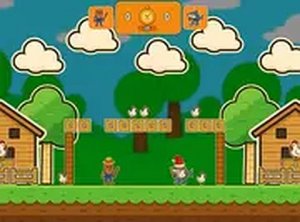
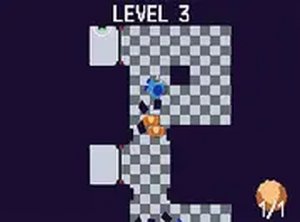
The pixel art visuals give the game a nostalgic feel reminiscent of classic 8-bit titles. Colors are bright and distinct, making it easy to identify different tile types at a glance. Characters are simple but expressive, with small animations that convey emotion when they reunite. The backgrounds remain clean and uncluttered, helping you focus on the puzzle itself. This visual clarity is a deliberate choice, supporting the game's emphasis on spatial reasoning without unnecessary distractions.
Gravity and Physics
One of the defining mechanics involves gravity. When you move a tile, the characters and any objects on it respond to the new arrangement. A tile shifted sideways might leave a character hanging in mid-air until you place a supporting block underneath. This introduces a layer of physics-based thinking. You must consider not only the final shape of the path but also how intermediate steps affect character positions. It adds a satisfying tension to each puzzle, as you balance short-term stability against long-term goals.
Progression and Difficulty
The game starts with straightforward layouts that teach basic tile manipulation. As you advance, levels introduce larger grids, more obstacles, and tighter constraints. Some stages require you to move tiles in a specific order to avoid trapping a character. Others include moving platforms or timed elements that shift periodically. The difficulty curve is gradual, so you never feel overwhelmed early on. By the later stages, you will need to plan several moves ahead, making each successful reunion feel earned.
Controls and Accessibility
All interactions use the mouse. Clicking a tile selects it, then clicking an adjacent empty space swaps their positions. Character movement is handled automatically once the path is complete, but you can also nudge them manually with keyboard keys. This dual-input system gives you flexibility. The game runs smoothly on most computers and does not require a powerful graphics card. Its simple control scheme makes it accessible to younger players and those who prefer a relaxed pace.
Family-Friendly Design
Path Builder Puzzle Adventure is built around cooperation and problem-solving. There is no combat, no time pressure, and no failure state that punishes you harshly. If you get stuck, you can restart the level instantly. This low-stakes environment makes it suitable for family play. Parents and children can work together to figure out solutions, discussing strategies and celebrating each completed puzzle. The game respects the player's time by offering a calm, focused experience that rewards patience.


Player Comments
Sign in to comment
You must be logged in before posting a review or rating.
No account? Create one
No comments yet. Be the first to comment!